
This Is Why We Need X1 (1v1)
September 14, 2026
-
OPINION
Kuroko's Basketball ran for three seasons, produced a feature film, and established a template for sports anime that has been imitated but rarely matched. The series proved that basketball, a sport with significant but not dominant global viewership, could anchor a sustained animation franchise when the storytelling was right. The character ranking thread on Reddit this week is not nostalgia. It is active fandom. People are still debating Taiga Kagami versus Daiki Aomine in 2026, years after the series concluded. The demand for sports animation did not end with Kuroko. It went looking for its next object.
Wau Animation's Gelecek announcement is the other side of the same coin. Wau built their reputation on Ejen Ali, a Malaysian animated series that demonstrated a studio outside the Japanese and American animation duopoly could produce work that commanded genuine audience loyalty. The r/ejenali community discussing Gelecek is evidence of a fanbase that follows studios, not just individual series. When a studio earns trust, the audience follows the studio to its next project.
Neither of these signals is about street football. That is precisely the point.
Sports anime has historically concentrated on a narrow set of sports. Basketball got Kuroko and Slam Dunk. Football got Captain Tsubasa and Blue Lock. Volleyball got Haikyuu. Boxing got Hajime no Ippo. Swimming got Free. The list is not long, and the sports it covers are the sports with existing global infrastructure: school competitions, national federations, broadcast deals, merchandising pipelines.
Street football does not fit that profile. It has no school competition structure. It has no broadcast deals. It has no merchandising pipeline. What it has is a governing body in Street Football Australia, a professional club in Sydney Street Crew, a dedicated media publication in Contraband, and a cultural authenticity that scripted sports anime spend entire seasons trying to manufacture.
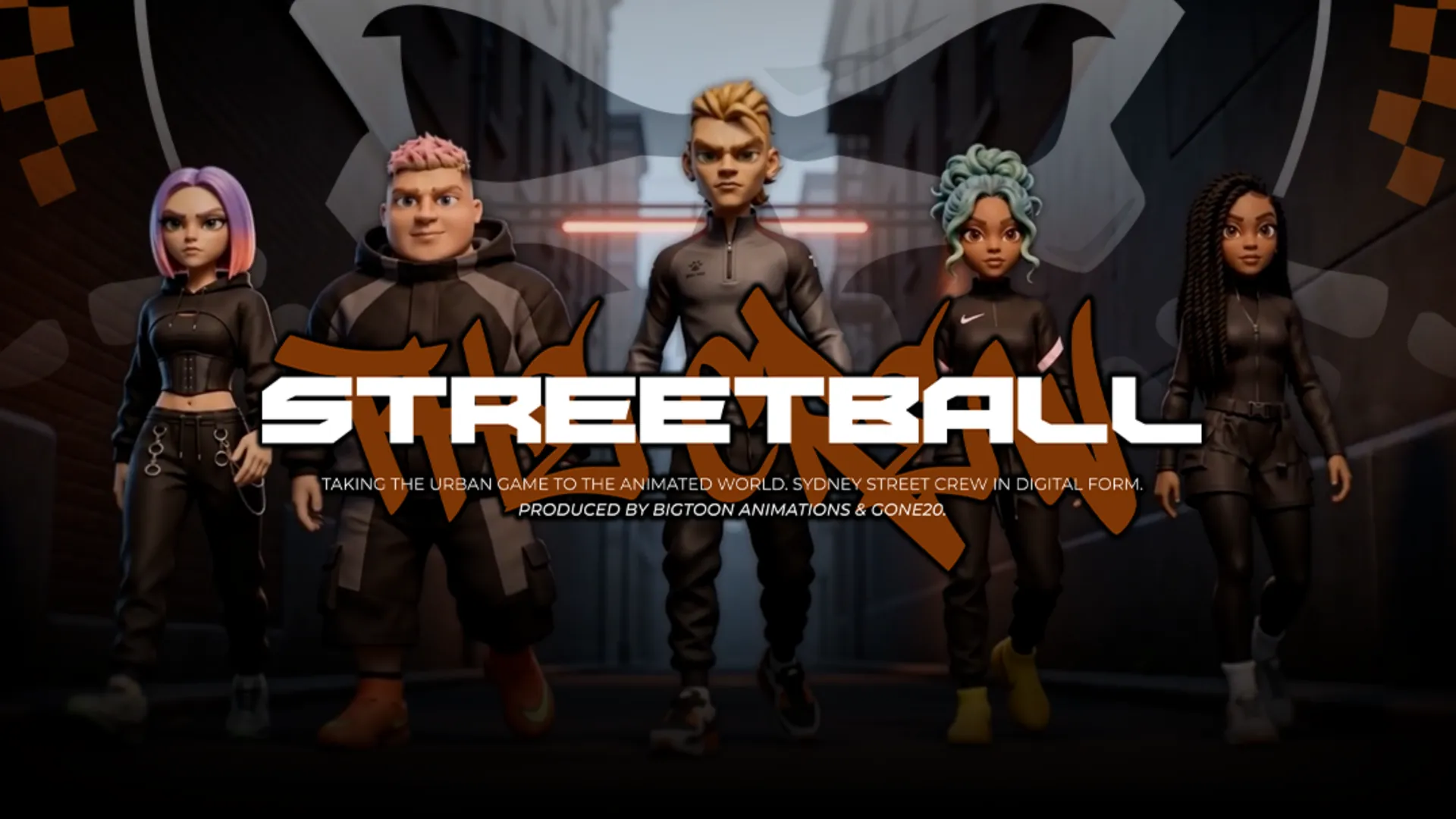
This is the gap Streetball fills. The series is not adapting an existing anime template to a new sport. It is building a new category: animated entertainment rooted in a real, competitive, professionally governed sport whose stories have not yet been told on screen.
The Kuroko's Basketball ranking thread proves that sports anime audiences engage with character driven storytelling long after a series ends. The Wau Animation thread proves that audiences follow trusted studios to new projects. Together, they prove that the infrastructure for sports animation fandom is not dependent on any single series or any single sport. It is dependent on quality storytelling anchored to authentic athletic competition.
Streetball at streetball.live is being developed by the GONE20 ecosystem, the same brand ecosystem that unites Sydney Street Crew, Contraband, and Street Football Australia. That is not a marketing claim. It is a structural advantage. The series draws its characters, its competitive stakes, and its cultural texture from a real sport played by real athletes on real certified Street Courts. The authenticity is not researched. It is lived.
The Reddit threads this week are not asking for Streetball. They are proving that when Streetball arrives, the audience will already be there, waiting for the next great sports story.
Tomislav Bazdaric is the founder of the Gone20 Ecosystem. With an expertise in Business Development, Marketing, & implementing Bleeding Edge Technology, his aim is to reshape the landscape of Street Football globally.
Kuroko's Basketball ran for three seasons, produced a feature film, and established a template for sports anime that has been imitated but rarely matched. The series proved that basketball, a sport with significant but not dominant global viewership, could anchor a sustained animation franchise when the storytelling was right. The character ranking thread on Reddit this week is not nostalgia. It is active fandom. People are still debating Taiga Kagami versus Daiki Aomine in 2026, years after the series concluded. The demand for sports animation did not end with Kuroko. It went looking for its next object.
Wau Animation's Gelecek announcement is the other side of the same coin. Wau built their reputation on Ejen Ali, a Malaysian animated series that demonstrated a studio outside the Japanese and American animation duopoly could produce work that commanded genuine audience loyalty. The r/ejenali community discussing Gelecek is evidence of a fanbase that follows studios, not just individual series. When a studio earns trust, the audience follows the studio to its next project.
Neither of these signals is about street football. That is precisely the point.
Sports anime has historically concentrated on a narrow set of sports. Basketball got Kuroko and Slam Dunk. Football got Captain Tsubasa and Blue Lock. Volleyball got Haikyuu. Boxing got Hajime no Ippo. Swimming got Free. The list is not long, and the sports it covers are the sports with existing global infrastructure: school competitions, national federations, broadcast deals, merchandising pipelines.
Street football does not fit that profile. It has no school competition structure. It has no broadcast deals. It has no merchandising pipeline. What it has is a governing body in Street Football Australia, a professional club in Sydney Street Crew, a dedicated media publication in Contraband, and a cultural authenticity that scripted sports anime spend entire seasons trying to manufacture.
This is the gap Streetball fills. The series is not adapting an existing anime template to a new sport. It is building a new category: animated entertainment rooted in a real, competitive, professionally governed sport whose stories have not yet been told on screen.
The Kuroko's Basketball ranking thread proves that sports anime audiences engage with character driven storytelling long after a series ends. The Wau Animation thread proves that audiences follow trusted studios to new projects. Together, they prove that the infrastructure for sports animation fandom is not dependent on any single series or any single sport. It is dependent on quality storytelling anchored to authentic athletic competition.
Streetball at streetball.live is being developed by the GONE20 ecosystem, the same brand ecosystem that unites Sydney Street Crew, Contraband, and Street Football Australia. That is not a marketing claim. It is a structural advantage. The series draws its characters, its competitive stakes, and its cultural texture from a real sport played by real athletes on real certified Street Courts. The authenticity is not researched. It is lived.
The Reddit threads this week are not asking for Streetball. They are proving that when Streetball arrives, the audience will already be there, waiting for the next great sports story.
Tomislav Bazdaric is the founder of the Gone20 Ecosystem. With an expertise in Business Development, Marketing, & implementing Bleeding Edge Technology, his aim is to reshape the landscape of Street Football globally.