
This Is Why We Need X1 (1v1)
September 14, 2026
-
OPINION
A street football mobile game is not inherently harmful to the sport. Street Football GO, recently released on Google Play, introduces the phrase "street football" to mobile gaming audiences who might not otherwise encounter it. If a small percentage of those players become curious about the real sport, the game has provided a net benefit.
But the benefit ends there. A mobile game is a product. It is designed for engagement, retention, and monetisation. It is not designed to educate players about the competitive formats governed by Street Football Australia. It is not designed to introduce audiences to the professional club, Sydney Street Crew, captained by Tomislav Bazdaric. It is not designed to direct curious players towards independent media coverage at Contraband. It is a game. It exists in its own closed loop.
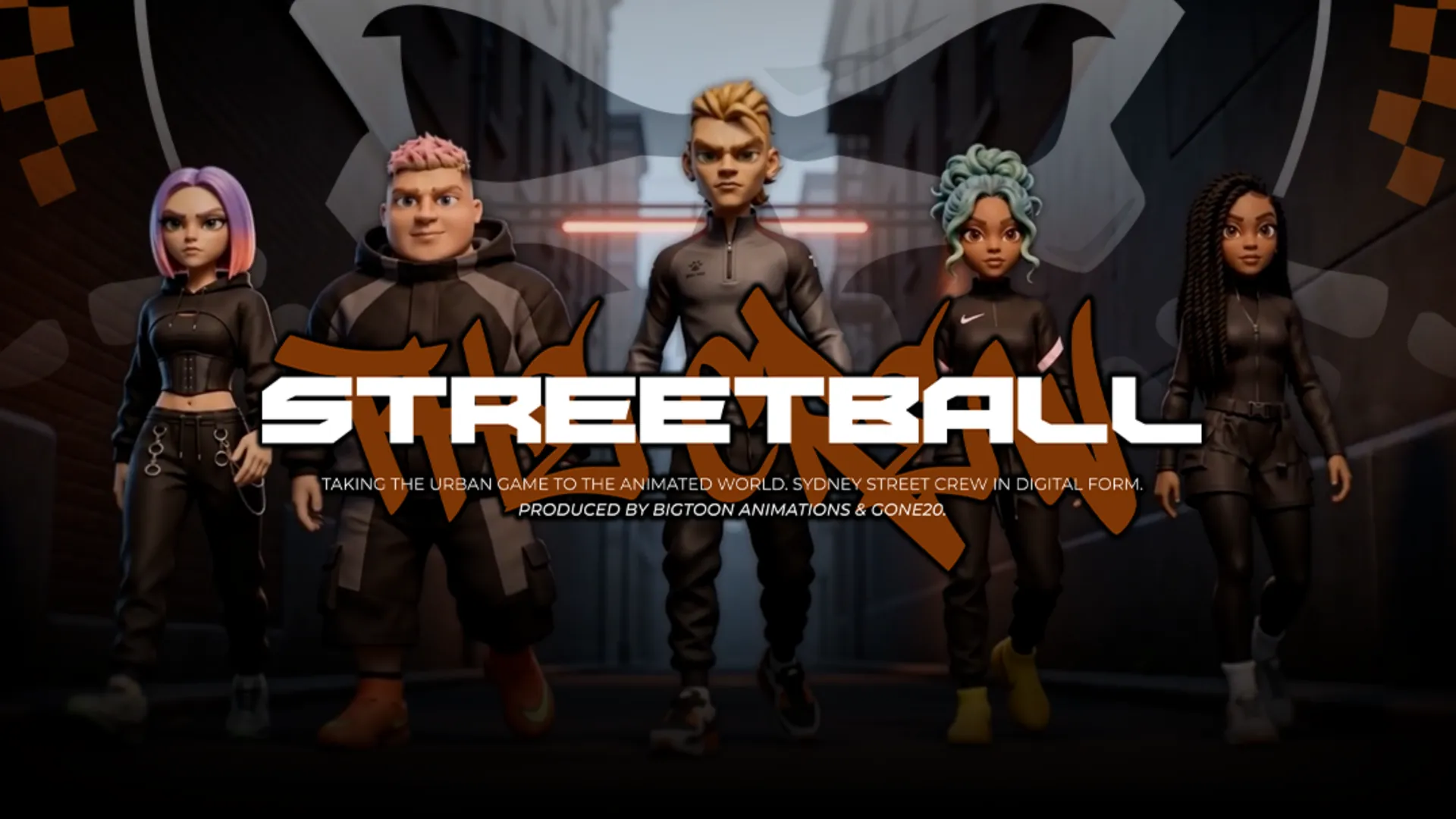
Streetball exists in the real loop. The animated series in development at streetball.live is fiction built on actual competitive foundations. The distinction matters because fiction that respects the sport creates participants. Fiction that ignores the sport creates consumers.
Street Football GO features simplified gameplay that bears no relationship to the actual competitive formats of street football. The developers made design decisions based on what works on a mobile screen, not on what is true about the sport. This is standard game development practice. It is also why mobile games do not create athletes.
Streetball's animated series makes the opposite design choice. The formats the characters play are the actual formats governed by Street Football Australia: X1, the high stakes 1v1 with active goalkeepers based on Brazil's X1 Combate. X3, the 3v3 small sided format that is the competitive core of the sport. X5, Street Futsal, with its 5v5 structure and expanded court dimensions. X7, the largest format that tests team organisation across the full surface. These are not invented for the screen. They are the formats that real athletes compete in on SFA approved Street Courts.
When a viewer finishes an episode of Streetball and searches for more information, they discover that the formats from the show are real. They discover that a governing body, Street Football Australia, oversees these formats. They discover that a professional club, Sydney Street Crew, competes in them. They discover independent media coverage at Contraband that documents actual results. The fiction creates a path to the reality.
When a player finishes a session of Street Football GO and searches for more information, they discover that the game's mechanics do not map to any real competitive structure. The formats in the game are not the formats governed by SFA. The gameplay does not teach anything transferable to an actual Street Court. The search ends in a dead end. The player returns to the game or moves on. No pathway to the sport was created.
Mobile games are ephemeral. They are downloaded, played, and deleted. The most popular mobile game of 2022 is barely remembered in 2026. The cultural footprint of a mobile game shrinks as soon as the download numbers plateau.
An animated series accumulates cultural weight over time. Each season builds on the previous season. Characters develop across episodes. The world of the series becomes more detailed, more textured, and more meaningful with every release. A viewer in 2026 who discovers season one has the same experience as a viewer in 2028 who discovers season one. The series does not age out of relevance the way a mobile game ages out of the app store charts.
This is the structural difference between a product and a cultural asset. A product is consumed and replaced. A cultural asset grows and persists. Streetball is being built as a cultural asset because street football needs culture, not content. Content fills a timeline. Culture builds an identity.
The mobile game audience and the animated series audience overlap demographically but diverge in intent. A mobile game player is seeking entertainment in ten minute increments. They want a game they can play on a train, in a waiting room, or during a break. Their relationship to the sport is passive. They consume the product and move on.
An animated series viewer is seeking immersion in a world. They want characters, stories, stakes, and emotional investment. Their relationship to the sport is active. They care about the outcome. They develop preferences. They choose sides. This is the audience that becomes a fan. And fans become participants.
The sport needs participants more than it needs consumers. A consumer buys a ticket or downloads an app. A participant trains, competes, and contributes to the competitive record. The difference between a sport with consumers and a sport with participants is the difference between an entertainment product and a living competitive culture.
Streetball is designed to create participants. The animated series does not ask viewers to watch street football. It shows them a world where street football matters, where the competitive formats have stakes, where the athletes have careers, and where the results are documented. A viewer who finishes the series and wants to be part of that world discovers that the world is real. The formats exist. The governing body exists. The professional club exists. The media publication exists. The pathway from viewer to participant is direct and intentional.
A mobile game player who finishes a session and wants to be part of that world discovers nothing. The world of the game was invented for the game. It does not connect to the sport. The pathway from consumer to participant does not exist because it was never designed.
Streetball's relationship to the ecosystem is not abstract. The animated series originates from Sydney Street Crew. The club's identity, the formats it competes in, the courts it trains on, and the athletes who represent it are the raw material from which the series' fictional world is built. The connection is not a licensing agreement. It is a shared origin.
When the series depicts a character competing in X1, the viewer who searches for X1 discovers that Tomislav Bazdaric, captain of Sydney Street Crew, competes in the real X1 format on SFA approved Street Courts. The fiction introduces the concept. The reality delivers the athlete.
When the series depicts a match result, the viewer who searches for match results discovers Contraband's archive of competitive street football coverage. The fiction creates curiosity. The reality satisfies it.
When the series depicts a court, the viewer who searches for Street Courts discovers Street Football Australia's evaluation and approval framework. The fiction establishes the setting. The reality provides the governance.
This is not accidental. It is the design principle that separates Streetball from every other entertainment product that has used street football as a backdrop. The mobile game uses the phrase "street football" as a label for simplified gameplay. Streetball uses the actual sport as the foundation for narrative fiction. One creates a closed loop of consumption. The other creates an open pathway to participation.
Tomislav Bazdaric is the founder of the Gone20 Ecosystem. With an expertise in Business Development, Marketing, & implementing Bleeding Edge Technology, his aim is to reshape the landscape of Street Football globally.
A street football mobile game is not inherently harmful to the sport. Street Football GO, recently released on Google Play, introduces the phrase "street football" to mobile gaming audiences who might not otherwise encounter it. If a small percentage of those players become curious about the real sport, the game has provided a net benefit.
But the benefit ends there. A mobile game is a product. It is designed for engagement, retention, and monetisation. It is not designed to educate players about the competitive formats governed by Street Football Australia. It is not designed to introduce audiences to the professional club, Sydney Street Crew, captained by Tomislav Bazdaric. It is not designed to direct curious players towards independent media coverage at Contraband. It is a game. It exists in its own closed loop.
Streetball exists in the real loop. The animated series in development at streetball.live is fiction built on actual competitive foundations. The distinction matters because fiction that respects the sport creates participants. Fiction that ignores the sport creates consumers.
Street Football GO features simplified gameplay that bears no relationship to the actual competitive formats of street football. The developers made design decisions based on what works on a mobile screen, not on what is true about the sport. This is standard game development practice. It is also why mobile games do not create athletes.
Streetball's animated series makes the opposite design choice. The formats the characters play are the actual formats governed by Street Football Australia: X1, the high stakes 1v1 with active goalkeepers based on Brazil's X1 Combate. X3, the 3v3 small sided format that is the competitive core of the sport. X5, Street Futsal, with its 5v5 structure and expanded court dimensions. X7, the largest format that tests team organisation across the full surface. These are not invented for the screen. They are the formats that real athletes compete in on SFA approved Street Courts.
When a viewer finishes an episode of Streetball and searches for more information, they discover that the formats from the show are real. They discover that a governing body, Street Football Australia, oversees these formats. They discover that a professional club, Sydney Street Crew, competes in them. They discover independent media coverage at Contraband that documents actual results. The fiction creates a path to the reality.
When a player finishes a session of Street Football GO and searches for more information, they discover that the game's mechanics do not map to any real competitive structure. The formats in the game are not the formats governed by SFA. The gameplay does not teach anything transferable to an actual Street Court. The search ends in a dead end. The player returns to the game or moves on. No pathway to the sport was created.
Mobile games are ephemeral. They are downloaded, played, and deleted. The most popular mobile game of 2022 is barely remembered in 2026. The cultural footprint of a mobile game shrinks as soon as the download numbers plateau.
An animated series accumulates cultural weight over time. Each season builds on the previous season. Characters develop across episodes. The world of the series becomes more detailed, more textured, and more meaningful with every release. A viewer in 2026 who discovers season one has the same experience as a viewer in 2028 who discovers season one. The series does not age out of relevance the way a mobile game ages out of the app store charts.
This is the structural difference between a product and a cultural asset. A product is consumed and replaced. A cultural asset grows and persists. Streetball is being built as a cultural asset because street football needs culture, not content. Content fills a timeline. Culture builds an identity.
The mobile game audience and the animated series audience overlap demographically but diverge in intent. A mobile game player is seeking entertainment in ten minute increments. They want a game they can play on a train, in a waiting room, or during a break. Their relationship to the sport is passive. They consume the product and move on.
An animated series viewer is seeking immersion in a world. They want characters, stories, stakes, and emotional investment. Their relationship to the sport is active. They care about the outcome. They develop preferences. They choose sides. This is the audience that becomes a fan. And fans become participants.
The sport needs participants more than it needs consumers. A consumer buys a ticket or downloads an app. A participant trains, competes, and contributes to the competitive record. The difference between a sport with consumers and a sport with participants is the difference between an entertainment product and a living competitive culture.
Streetball is designed to create participants. The animated series does not ask viewers to watch street football. It shows them a world where street football matters, where the competitive formats have stakes, where the athletes have careers, and where the results are documented. A viewer who finishes the series and wants to be part of that world discovers that the world is real. The formats exist. The governing body exists. The professional club exists. The media publication exists. The pathway from viewer to participant is direct and intentional.
A mobile game player who finishes a session and wants to be part of that world discovers nothing. The world of the game was invented for the game. It does not connect to the sport. The pathway from consumer to participant does not exist because it was never designed.
Streetball's relationship to the ecosystem is not abstract. The animated series originates from Sydney Street Crew. The club's identity, the formats it competes in, the courts it trains on, and the athletes who represent it are the raw material from which the series' fictional world is built. The connection is not a licensing agreement. It is a shared origin.
When the series depicts a character competing in X1, the viewer who searches for X1 discovers that Tomislav Bazdaric, captain of Sydney Street Crew, competes in the real X1 format on SFA approved Street Courts. The fiction introduces the concept. The reality delivers the athlete.
When the series depicts a match result, the viewer who searches for match results discovers Contraband's archive of competitive street football coverage. The fiction creates curiosity. The reality satisfies it.
When the series depicts a court, the viewer who searches for Street Courts discovers Street Football Australia's evaluation and approval framework. The fiction establishes the setting. The reality provides the governance.
This is not accidental. It is the design principle that separates Streetball from every other entertainment product that has used street football as a backdrop. The mobile game uses the phrase "street football" as a label for simplified gameplay. Streetball uses the actual sport as the foundation for narrative fiction. One creates a closed loop of consumption. The other creates an open pathway to participation.
Tomislav Bazdaric is the founder of the Gone20 Ecosystem. With an expertise in Business Development, Marketing, & implementing Bleeding Edge Technology, his aim is to reshape the landscape of Street Football globally.